





How to Make Your Kitchen Range Hood Quiet (Without Losing Power)

Key Takeaways
- Proper ducting reduces noise by up to 50% – Rigid ductwork acts like a muffler for your range hood.
- Static pressure is the #1 noise culprit – Long ducts, too many elbows, or undersized roof caps make your hood work harder and louder.
- Inline blowers can cut noise by 60% – Moving the motor to your attic dramatically reduces kitchen noise.
- A properly sized roof cap won't add noise – Don't undersize your exhaust vent.
Table of Contents
How loud is my range hood, and how can I make my range hood quieter? This is the number one question we get asked here at Proline Range Hoods. In this article, we are going to dive into the why and how to make your kitchen quieter.
Our philosophy here at Proline has always been power and energy efficiency first. We engineer our kitchen range hoods to remove smoke, grease, cooking fumes, and cooking odors efficiently, but moving extreme amounts of cubic feet of air requires energy, ultimately resulting in noise. We want to emphasize that this is completely normal for kitchen appliances with powerful ventilation.
However, you don't need to deal with a jet engine in your kitchen environment. We ran five tests to show you how range hood installation can change everything in your cooking experience.
If you'd rather watch the experiment in real time, check it out here:
Test 1: Raw Noise No Roof Cap
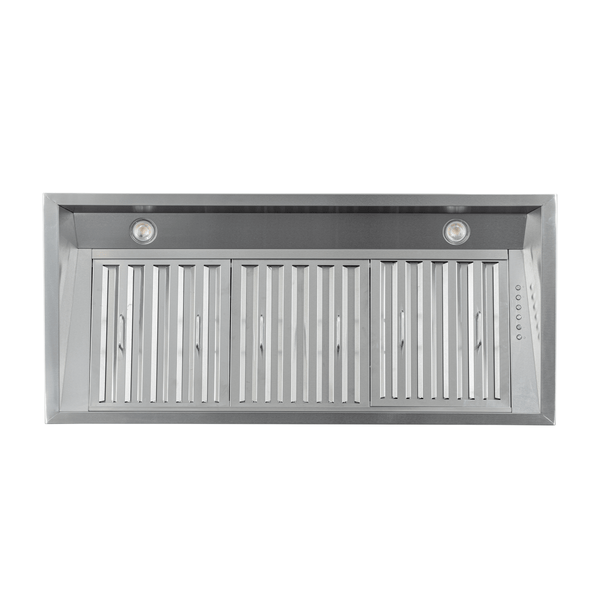
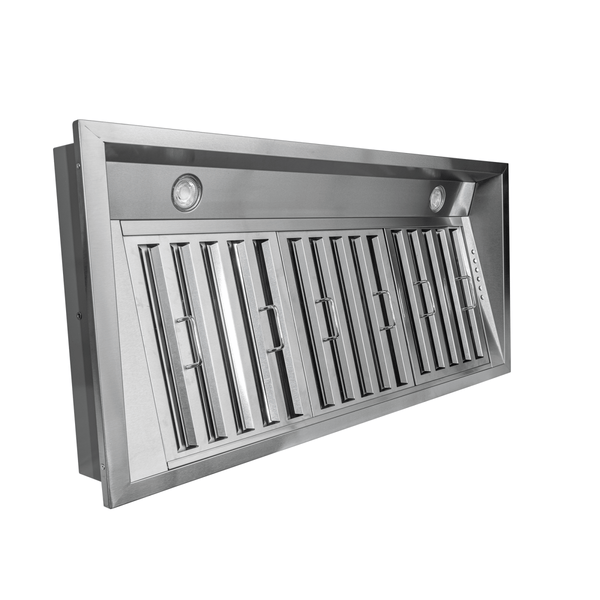
We have used this test with a popular vent hood, the ProSI. We first measured the raw noise with a decibel reader, which measures the intensity of the sound coming out from the range hood fan. For this test, this kitchen hood has zero ducting attached. The air is being pulled in and dumped right back out into the room. There's no insulation, no buffer, absolutely nothing that can dampen the noise level. This is the loudest it will ever be. Here are the fan speed settings and readings that we got.
Note: Ambient room is always at 45dB
| No Duct | Decibel Reading |
|---|---|
| Speed 1 | 63 dB |
| Speed 2 | 68 dB |
| Speed 3 | 70 dB |
| Speed 4 | 71 dB |
That's pretty loud, right? That's raw fan noise from the range hood blower. Nobody installs a vented range hood like this. In the next study, we'll move our hood and see what happens when we add proper ductwork.

Test 2: Ducted
For this setup, we've ducted it up through the roof. We are using 10-inch rigid ducting, which is so important in any range hood installation. The reason we use rigid ducting is to minimize any additional drag or backpressure in the duct system, which, if you compare it to a flex duct, for example, you can see that the shape with all its ridges, bends, and corners actually creates more pressure and airflow resistance, resulting in more noise.
Now, we're venting into open air with very little restriction. The exhaust duct acts like a muffler, so to speak, containing the air noise and reducing sound levels. This is key to achieving a quiet range hood.
| With Duct No Roof Cap | Decibel Reading | Reduction |
|---|---|---|
| Speed 1 | 60 dB | 50% quieter |
| Speed 2 | 65 dB | 50% quieter |
| Speed 3 | 67 dB | 50% quieter |
| Speed 4 | 69-70 dB | 37% quieter |
Even at max fan speed, we've shaved off significant airflow noise just by containing the air movement. This demonstrates why proper ductwork is essential for any ventilation system.

Test 3: Ducting with Roof Cap
Now, along with proper ducting, we added a roof cap to the exhaust vent, and you'll see that a properly sized roof cap doesn't add very much noise.
| Duct with Roof Cap | Decibel Reading |
|---|---|
| Speed 1 | 62 dB |
| Speed 2 | 66 dB |
| Speed 3 | 67 dB |
| Speed 4 | 68 dB |
These noise ratings show that a good roof cap maintains quiet performance without sacrificing extraction power.

Test 4: Static Pressure
But what happens if you get the installation wrong?
This is where most problems happen with kitchen vents. In this case, we are going to simulate static pressure, which is caused by using ductwork that is too long, using too many elbows, or a roof cap that is too small. These airflow restrictions are the most common noise source in a ventilation system and can ruin your kitchen experience.
When the range hood blower is ramping up, fighting to push the air out. That strain creates blower noise that you absolutely don't want to hear in your cooking environment. Let's take a look at the numbers.
| With Resistance | Decibel Reading | Increase |
|---|---|---|
| Speed 1 | 68-69 dB | 400% Louder |
| Speed 2 | 69 dB | 100% Louder |
| Speed 3 | 70 dB | 100% Louder |
| Speed 4 | 70 dB | 60% Louder |
Speed 1 is now almost as loud as Speed 4 with proper ducting and roof cap. We've lost all our quiet performance simply because of the airflow restriction we added. This is a common issue that affects air quality and makes cooking tasks less enjoyable.
Complete Noise Comparison: All Tests Side-by-Side
| Fan Speed | No Duct (Raw) | With Duct | Duct + Roof Cap | With Resistance |
|---|---|---|---|---|
| Speed 1 | 63 dB | 60 dB | 62 dB | 68-69 dB |
| Speed 2 | 68 dB | 65 dB | 66 dB | 69 dB |
| Speed 3 | 70 dB | 67 dB | 67 dB | 70 dB |
| Speed 4 | 71 dB | 69-70 dB | 68 dB | 70 dB |
Green = Quietest | Red = Loudest

Last Case Study
Another option if you want to maximize quiet performance in your kitchen: using an inline blower, also known as a remote blower. It's called "Inline" because it installs in line with your ductwork, usually inside your attic, crawlspace, or between the ceiling joists. This is one of the best soundproofing techniques for home chefs who want powerful ventilation without the noise. Whether you have a wall mount range hood, an island range hood, or an insert range hood setup, a remote fan can dramatically improve your cooking environment and reduce range hood noise.
Since we can't easily install a full attic system in a studio just for a 30-second clip, we need a simulation experiment using the inline blower to prove the concept of the distance away from the user in a kitchen setting.
| Inline Blower | Decibel Reading |
|---|---|
| 1300 CFM blower | 65 dB (60% quieter than restricted airflow) |
If you want this level of very quiet operation and low noise for your cooking area, check out our ProV and HE series. We designed these high-quality range hood models to run these remote fan systems for residential kitchens. Check the product specifications for CFM ratings and sones ratings to find the best range hoods and the quietest range hood for your kitchen design. These hoods deliver quiet fan performance even at the lowest setting, making them ideal kitchen appliances for any home chef.
Takeaways
So, what did we learn? If your kitchen exhaust fan is too loud, don't blame the fan motor immediately. Inspect your installation first and remember that the hood will never be perfectly quiet. Understanding building science and how airflow moves through your system is key to reducing range hood noise.
When you go inspect your ventilation system, here are the 4 things you want to look out for:
1. Check Your Duct Length
The shorter your duct length is, the better the performance will be. Larger ducts also help improve airflow and reduce kitchen noise. The right duct size makes a huge difference in sound levels.
2. Count the Number of Elbows
Every 90-degree turn adds airflow resistance, and adding resistance adds more sound, as we learned in our experiment. Laminar straight airflow is the key to a quiet range hood and a better kitchen experience for any home chef.
3. Check the Roof Vent
Make sure it's not too small for the CFM. Using the right duct size prevents static pressure, decreasing sound. The wider and taller the exhaust outlet of the roof cap, the better, as this allows for a balanced exit of the airflow from the duct system and improves indoor air quality in your kitchen space.
4. How Many Dampers Do You Have?
If you're using more than one damper flap, eliminate one of them. The air has to work even harder if you're using multiple dampers, leading to unnecessary wear and tear on your system and increased fan noise. Keep your damper at the roof cap level. Then, check the type of damper you're using; if it's a heavier gauge damper, it requires a lot more force to open, making it so the hood works harder. It's like adding the restriction test we did. A lightweight damper is exactly what you need for easy maintenance and noise control.
Conclusion
I hope you learned a bit more about how sound waves travel within a kitchen hood and how to minimize any problems you might have in your setup. Whether you're dealing with a gas range or electric ranges, it's so important to install your ventilation system the correct way first, so you never run into problems with range hood noise.
If you have any questions about which setup is right for your kitchen design, give our Customer Service a call. We're here to make sure your cooking tasks are enjoyable, and your kitchen stays quiet with the right kitchen exhaust solution.
Contact Us