


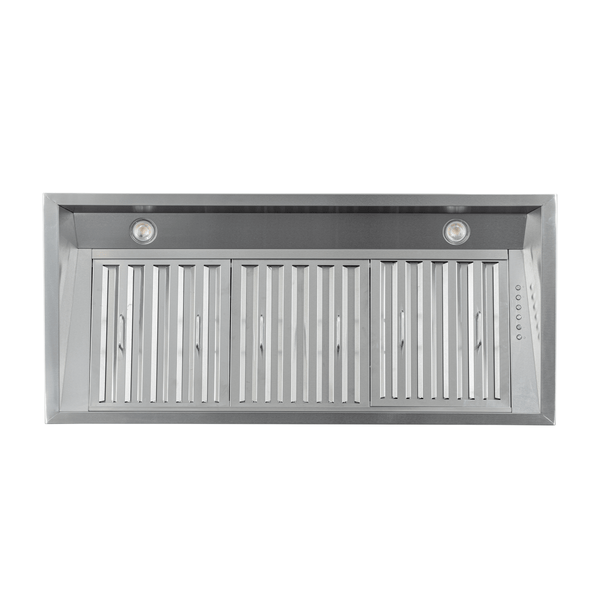
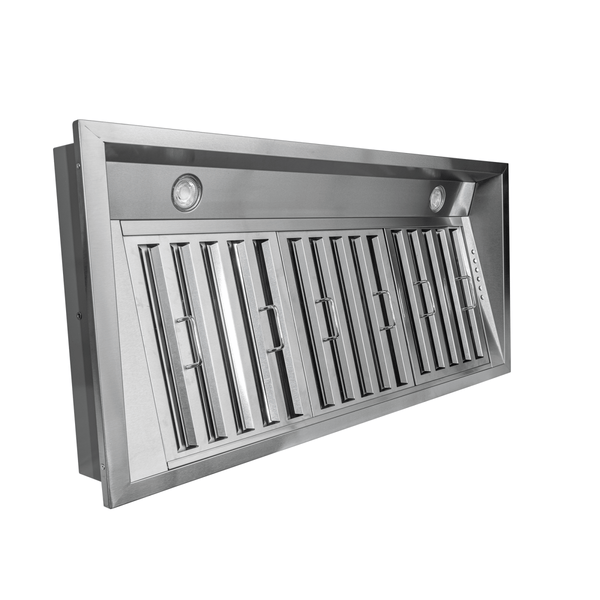



Dangers of Cooking Without Range Hood Ventilation?

Key Takeaways
- Gas stoves produce NO2 pollution that exceeds EPA outdoor safety limits within minutes of use
- 12.7% of childhood asthma cases in the U.S. are directly linked to gas stove exposure
- Nanoparticles from gas burners match emissions from car exhaust engines
- Ducted range hoods eliminate 80-95% of cooking pollutants when properly used
- Only 10-25% of people actually use their range hoods during cooking
Table of Contents
You would never run a diesel engine inside your kitchen. But according to researchers at Purdue University, that comparison isn't far off from what happens every time you turn on a gas burner without ventilation.
Over the past three years, landmark studies from Stanford, Purdue, Lawrence Berkeley National Laboratory (LBNL), and the Rocky Mountain Institute (RMI) have fundamentally changed what we know about indoor cooking pollution. The findings are striking: gas stoves produce nitrogen dioxide at levels that exceed outdoor safety limits within minutes, emit nanoparticles that rival those from car exhaust, and contribute to nearly 200,000 childhood asthma cases nationwide.
The Good News: A properly installed, ducted range hood can eliminate up to 95% of these pollutants before they ever reach your lungs.
This guide breaks down the science, the stats, and the practical steps you can take right now to protect your household — whether you cook with gas, electric, or induction.

The Hidden Dangers of Cooking Without Ventilation
Cooking generates a cocktail of pollutants regardless of your fuel source — but gas stoves introduce an entirely separate category of risk. Every time a gas burner ignites, it produces nitrogen dioxide (NO2), carbon monoxide (CO), formaldehyde, fine particulate matter (PM2.5), and ultrafine nanoparticles. Unlike outdoor pollution, which disperses through the open air, these contaminants concentrate in the enclosed space of your kitchen and migrate throughout your home within an hour.
Alarming Reality: The United States has no federal indoor air quality standards for NO2. The outdoor standard of 53 parts per billion (ppb) hasn't been updated since 1971, and it doesn't apply indoors. Your kitchen could have pollution levels several times higher than what's considered safe outside — with no regulatory mechanism to flag it.
Your Gas Stove Produces More NO2 Than Outdoor Traffic
Nitrogen dioxide is the signature pollutant of gas stove combustion, and the scale of indoor exposure has only recently come into focus.
Kitchen NO2 levels spike to 200–400 ppb within minutes of lighting a burner — more than double the EPA's 1-hour outdoor standard of 100 ppb. That pollution migrates into bedrooms within an hour.
A May 2024 study published in Science Advances by Stanford University researchers found that gas stoves increase long-term NO2 exposure by 4.0 ppb on average across the country. Equivalent to roughly 75% of the World Health Organization's safe annual guideline. Stanford professor Rob Jackson put the numbers in perspective: if you use a gas stove, the NO2 you breathe indoors from your stove alone often matches what you absorb from all outdoor sources combined.
The exposure gap between small and large homes is dramatic. Residents of homes under 800 square feet experience four times the NO2 concentration compared to those in homes over 3,000 square feet, simply because there's less volume to dilute the emissions.
By December 2025, Stanford published follow-up research estimating that gas stove NO2 may contribute to approximately 19,000 U.S. deaths annually — a figure equal to roughly 40% of deaths attributed to secondhand smoke exposure. The annual societal cost amounts to around $250 billion.
The burden isn't distributed evenly. American Indian and Alaska Native households face 60% more NO2 exposure than the national average. Black and Hispanic/Latino households experience approximately 20% higher exposure, reflecting longstanding disparities in housing size, building age, and appliance type.
What this means for your kitchen: If you cook with gas, a ducted range hood is your primary defense. Research from LBNL shows the best-performing hoods reduce NO2 concentrations by 80–95% when running at around 229 CFM a level well within the output of most residential hoods.
Gas Burners Emit Nanoparticles on Par With Car Engines
In February 2024, a Purdue University study published in PNAS Nexus revealed something alarming about gas stove emissions: researchers measured up to 10 quadrillion nanocluster aerosol particles emitted per kilogram of fuel burned a rate that matches or exceeds the output of internal combustion engines.
Because these particles are generated indoors where dilution is minimal, people cooking with gas may inhale 10 to 100 times more nanoparticles than they would standing beside a busy road.
Professor Nusrat Jung, who led the Purdue research, offered a comparison that resonated across media coverage: no one would use a diesel engine exhaust pipe as an air supply to their kitchen, yet the nanoparticle output tells a remarkably similar story.
These ultrafine particles are especially dangerous because they're small enough to bypass the body's natural filtration systems, passing through the lungs and directly into the bloodstream. Unlike larger PM2.5 particles, nanoparticles are harder to detect with consumer-grade monitors and aren't yet regulated by any federal agency.
Gas Stoves Are Linked to 12.7% of Childhood Asthma Cases
One of the most cited statistics in the gas stove health debate comes from a 2022 analysis co-authored by RMI and Albert Einstein College of Medicine: 12.7% of current childhood asthma in the United States is attributable to gas stove use. That figure places gas stoves in the same category as secondhand smoke, which accounts for roughly 12% of childhood asthma cases.
Updated modeling from Stanford's 2024 research suggests gas stoves may now be responsible for approximately 200,000 current childhood asthma cases nationally.
A 2013 meta-analysis published in the International Journal of Epidemiology found that children living in homes with gas stoves have a 42% greater risk of developing asthma compared to children in homes without gas cooking.
The risk varies significantly by state. Illinois carries the highest attributable burden at 21.1%, followed by California at 20.1% and New York at 18.8% — driven largely by higher gas stove prevalence in these regions.
The Hopeful Data: A large-scale study by Oregon State University using NHANES III data found that children in homes where ventilation was used during gas cooking were 32% less likely to have asthma, 38% less likely to have bronchitis, and 39% less likely to have wheezing.
If you have young children and a gas stove, this is arguably the most important advice in this entire article: always run your range hood when cooking, every single time.
Carbon Monoxide and Formaldehyde Build Up Fast
While NO2 gets the most attention, gas stoves also release carbon monoxide and formaldehyde: two pollutants with well-documented health effects that accumulate quickly in enclosed kitchens.
Carbon monoxide levels from gas stove use can reach above 34 mg/m³, which approaches or exceeds the WHO guideline of 35 mg/m³ over one hour. In January 2023, nearly 30,000 gas stoves were recalled due to a dangerous CO emission risk.
Formaldehyde concentrations during gas stove use range from 0.18 to 0.45 mg/m³. Formaldehyde is classified as a known human carcinogen by both the National Cancer Institute and the EPA, making any sustained exposure worth mitigating.
Gas Stoves Leak Methane Even When They're Off
A 2022 Stanford study published in Environmental Science & Technology measured methane emissions from 53 California homes and found a result that surprised even the researchers: 76–80% of total methane emissions from gas stoves occur when the stoves are completely off. The leaks come from loose connectors, aging fittings, and imperfect valve seals.
Across the country, the cumulative methane from residential gas stoves carries a climate impact equivalent to the CO2 emissions from approximately 500,000 gasoline-powered cars.

How Range Hoods Protect You
The research is clear about the problem. Now let's look at what the same body of science says about the solution. Range hoods are the single most effective appliance for reducing cooking-related indoor air pollution — but their performance varies enormously based on design, installation, and usage.
Capture Efficiency Ranges From 15% to 98%
The percentage of pollutants that your hood actually intercepts before they escape into the room is the metric that matters most. Lawrence Berkeley National Laboratory, the most-cited authority on residential range hood performance, tested 15 hoods installed in real California homes and found capture efficiencies ranging from below 15% to 98%.
| Hood Performance Metric | Finding |
|---|---|
| Best-performing hood | 80-95% pollutant reduction at ~229 CFM |
| Code-compliant CA hoods | 55% average capture efficiency |
| Energy Star-rated hoods | 30% average capture efficiency |
| Front burner capture | 30-40% efficiency |
| Back burner capture | Up to 90% efficiency |
| Recommended minimum | 80% capture efficiency for health protection |
The Takeaway: Not all range hoods provide the same protection. A wall-mount hood or under-cabinet hood sized appropriately for your cooktop and ducted to the exterior will dramatically outperform a small recirculating unit. Use our CFM calculator to determine the right airflow for your kitchen setup. Here at Proline we recommend that you have 6 inches of overhang that is 3 inches on each side.
Ductless Hoods Cannot Remove Combustion Gases
This is one of the most important distinctions in kitchen ventilation, and it's backed by definitive data.
Critical Fact: Recirculating (ductless) range hoods cannot remove NO2, CO, or any combustion gases. They pass air through a filter and push it back into the room. The gases that pose the greatest health risk pass right through.
Even for particles, ductless performance is limited. Research shows that ductless hoods with brand-new carbon filters remove only 20–50% of particles. A study by Jacobs et al. found that carbon filter NO2 removal drops from 60% when new to just 20% after only 19 days of cooking. In practice, only 11% of people with recirculating hoods replace their carbon filters within 12 months.
If you currently have a ductless hood or OTR microwave, upgrading to a ducted range hood is one of the highest-impact changes you can make for your home's air quality. Learn more in our complete ducted vs. ductless comparison.
Ventilation Reduces Childhood Asthma Risk by 32%
The health case for range hood use goes beyond pollutant reduction percentages. Several large-scale studies have measured the direct health outcomes tied to ventilation use, and the results are compelling.
The Oregon State University / NHANES III study found that children in homes where ventilation was used during gas cooking experienced 32% less asthma, 38% less bronchitis, and 39% less wheezing.
On the cancer prevention side, multiple studies have found that proper kitchen exhaust ventilation may reduce lung cancer risk by as much as 50%. The WHO reports that cooking fumes in poorly ventilated kitchens contribute to 3.8 million premature deaths worldwide each year.
For those considering a full appliance switch, the data supports that approach as well. A 2014 Baltimore study found that replacing gas stoves with electric models reduced indoor NO2 by 51% in kitchens and 42% in bedrooms. A 2024 Columbia University study of NYC public housing found a 56% reduction in daily NO2 after switching from gas to induction cooktops.

Only 10–25% of People Actually Use Their Range Hood
Perhaps the most frustrating finding in all the ventilation research is this: even in homes that have range hoods installed, the vast majority of people don't use them.
RMI's 2023 analysis found that only 10–25% of households run their range hoods during cooking. A California survey of 2,781 homes found that only 34% of respondents reported using ventilation always or most of the time.
The primary barrier? Noise. It was the most commonly cited reason for non-use across multiple studies. This is why hood selection matters, cheaper hoods often produce significantly more noise at equivalent airflow levels, discouraging consistent use.
Proline hoods are engineered to operate at lower noise levels across their CFM range, making them practical for everyday use. Browse our range hood inserts for options that pair strong airflow with quiet operation.
The Most Encouraging Stat: After being informed about the health benefits of range hood use, 64% of people said they would use their hoods more often. Education is the lever, and it's the reason articles like this one matter.
New Building Codes Are Making Ventilation Mandatory
The regulatory environment around gas stoves and kitchen ventilation is shifting rapidly. Here's where things stand heading into 2026:
New York State became the first state to ban fossil fuel hookups in most new residential construction. New buildings under seven stories are banned from gas hookups starting in 2026, with taller buildings following by 2029.
California's 2025 Energy Code, effective January 1, 2026, requires heat pumps for most new construction heating. The California Air Resources Board is drafting a rule requiring all new space and water heaters sold in the state to be zero-emission by approximately 2030.
Federal Level: The Consumer Product Safety Commission requested public input on gas stove health hazards but has not enacted a ban. The Department of Energy proposed efficiency standards that could effectively remove roughly half of current gas stove models from the market.
More than 20 states have passed laws prohibiting cities from banning gas hookups, showing the political divide on this issue.
Regardless of where you stand on gas stove policy, the regulatory trend reinforces a practical reality: proper ventilation is becoming a building code requirement, not a luxury.
What You Can Do Right Now
You don't need to wait for regulations or a full kitchen remodel to improve your indoor air quality. Here are the steps ranked by impact and feasibility:
7 Steps to Protect Your Indoor Air Quality
- Always run your range hood while cooking and for 10–15 minutes after. This single habit addresses the majority of cooking-related pollution. Even a modest hood makes a meaningful difference compared to no ventilation at all.
- Use back burners whenever possible. LBNL research shows back burners achieve up to 90% capture efficiency versus 30–40% for front burners. This costs nothing and dramatically improves how much pollution your hood intercepts.
- Upgrade from a ductless hood or OTR microwave to a ducted range hood. If your current ventilation can't remove combustion gases, it's not protecting you from the most dangerous pollutants. Explore Proline's full range hood collection to find the right fit for your kitchen.
- Size your hood correctly. An undersized hood can't capture pollutants effectively. Use our CFM calculator to determine the airflow you need based on your stove type, kitchen size, and duct configuration.
- If your hood exceeds 400 CFM, ensure you have make-up air. IRC M1503.6 requires make-up air for hoods above 400 CFM when fuel-burning appliances are present. Without it, negative pressure can reduce exhaust fan performance by up to 30%. Read our guide on make-up air systems.
- Open a window if you have no hood. It's far less effective than a dedicated exhaust system, but any air exchange is better than none.
- Consider switching to induction. If a stove replacement is in your future, induction eliminates all combustion-related pollutants at the source. You still need a range hood for cooking fumes, grease, moisture, and smoke from the food itself, but the most dangerous gas-combustion pollutants disappear entirely.
Frequently Asked Questions
Is cooking with gas really that bad for your health?
The peer-reviewed evidence is substantial. Gas stoves produce NO2 at levels that exceed outdoor safety standards within minutes of use, emit nanoparticles at rates comparable to car engines, and are linked to 12.7% of childhood asthma cases nationally. The health risks are real, but they're also manageable — proper ventilation with a ducted range hood reduces pollutant exposure by 80–95%.
Do electric and induction stoves also need range hoods?
Yes. While electric and induction cooktops eliminate combustion-related pollutants like NO2 and CO, all cooking produces grease particles, moisture, smoke, and odors. High-heat cooking methods like searing, frying, and stir-frying generate significant PM2.5 regardless of fuel source. A range hood protects your indoor air quality and prevents grease buildup on kitchen surfaces.
What CFM do I need for my range hood?
The right CFM depends on your stove type, cooktop width, kitchen volume, and duct run length. As a general guideline, gas ranges need more CFM than electric due to the additional heat and combustion byproducts. Use our CFM calculator for a personalized recommendation.
Are ductless range hoods effective?
Ductless hoods provide limited filtration for grease and some particles, but they cannot remove combustion gases like NO2, CO, or formaldehyde. Carbon filter performance degrades rapidly — from 60% NO2 removal when new to 20% after just 19 days. For anyone cooking with gas, a ducted hood is strongly recommended. Read our full ducted vs. ductless comparison.
Do I need make-up air for my range hood?
Under the International Residential Code (IRC M1503.6), make-up air is required for range hoods exceeding 400 CFM when fuel-burning appliances are present in the home. In all-electric homes, this requirement doesn't apply, even for high-CFM hoods. Without adequate make-up air, your hood's performance can drop by up to 30%, and you risk backdrafting from furnaces or water heaters.
Why is my range hood so loud?
Noise is the number one reason people avoid using their range hoods, according to multiple studies. Noise levels are largely determined by motor quality, fan blade design, and duct sizing. An undersized or kinked duct forces the motor to work harder, increasing noise. Proline hoods are designed to balance high airflow with reduced noise, and proper installation with smooth, correctly sized ductwork makes a significant difference.
Is there a law requiring range hoods in homes?
The International Residential Code does not require installation of a range hood, it only regulates hoods once they're installed. However, the scientific evidence overwhelmingly supports having one. As LBNL research demonstrated, 4 of 9 California homes exceeded the national NO2 standard from gas cooking alone when no hood was in use. There may be no law requiring a range hood, but the data says you absolutely need one.
Protect your family's health with a properly installed, ducted range hood. Explore Proline's complete selection of high-performance ventilation solutions designed to eliminate cooking pollutants effectively and quietly.
Shop Range HoodsHave questions about choosing the right range hood for your kitchen? Our ventilation experts are here to help. Call us at (877) 901-5530 for personalized guidance.
Sources
This article draws on peer-reviewed research from Stanford University (Science Advances, May 2024; PNAS Nexus, December 2025), Purdue University (PNAS Nexus, February 2024), Lawrence Berkeley National Laboratory, Rocky Mountain Institute, Oregon State University / NHANES III, Columbia University Climate School, World Health Organization, U.S. Environmental Protection Agency, National Cancer Institute, ASHRAE Standard 62.2, and International Residential Code (IRC) Section M1503.6.